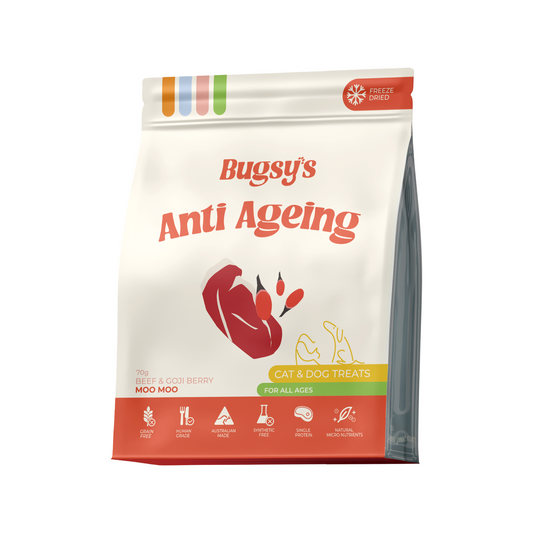
Bugsy's makes complete meals in both formats. Neither is cooked and both are shelf-stable, so the choice comes down to how the moisture is removed and what that does to texture, nutrient retention and price.
Swipe the table sideways to see both.
|
Air-dried |
Freeze-dried |
| How it's dried |
Gentle warmth and moving air, 50–70°C, over hours to days |
Frozen, then the ice is drawn off under vacuum — no heat at all |
| Moisture removed |
~70–80% |
Up to 95% |
| Texture |
Firm and chewy — looks and serves like a very good kibble |
Light and porous — crumbles easily, rehydrates in minutes |
| Add water? |
Optional |
Recommended for a full meal |
| Shelf life, unopened |
12–18 months |
18–25+ months |
| Nutrient retention |
High — well above kibble |
Highest — heat-sensitive vitamins and proteins survive intact |
| Cost per day |
Lower |
Higher — the process is slower and more energy-intensive |
Air-dried tends to suit you if
- You want an everyday meal that scoops and serves like kibble, with no preparation
- Budget matters, but you still want a large step up from conventional dry food
- Your dog is coming off kibble and a familiar format will make the switch easier
- Your dog likes something to chew rather than something soft
Freeze-dried tends to suit you if
- You want the closest thing to raw that doesn't need a freezer
- You have a fussy eater — the concentrated aroma once rehydrated is what usually turns them around
- You're after a novel protein: kangaroo, venison or wild boar
- You travel or board your pet often, and want the lightest, simplest option to pack
Or use both. Plenty of owners feed air-dried as the everyday base and add freeze-dried as a topper, a training reward or the travel option. It's the approach Bugsy's themselves suggest — most of the freeze-dried benefit at a fraction of the cost of feeding it as the whole meal.